ELECTROLYTES 101: WHAT THEY ARE, WHO NEEDS THEM, AND HOW TO CHOOSE ONE
Social media (ads and influencers) will have you convinced that you need to be taking electrolytes. They come in all forms (powders, tablets, packets, drops, drinks, etc.), have a variety of nutrient profiles, and make big promises (hydration! energy! recovery!). But as with the nuance of so many topics in nutrition: do we need them?
Maybe! And maybe not.
Electrolytes themselves aren’t just wellness-industry-hype. They are essential minerals that our bodies need every day. But that doesn’t mean they are something we need to supplement with every day, as we get plenty of electrolytes through our diets. So let’s chat more about what they actually do, where you’re already getting them, and what (if anything) to look for in an electrolyte product.
WHAT ARE ELECTROLYTES?
Electrolytes are minerals that carry an electrical charge when dissolved in fluid; the major ones in the body are sodium, potassium, chloride, magnesium, calcium, phosphate, and bicarbonate. If this sounds a little like middle/high school science class, it’s because in a way, it is. These electrical charges help our muscles contract, and are also an important part of chemical reactions in our bodies (think: hydration and the balance of fluids inside/outside of cells, nerve signaling, and heart function, among many others).
So, yes, electrolytes are quite important. But the important distinction: needing electrolytes and needing an electrolyte supplement are not the same thing. We consume electrolytes through things that we are eating and drinking on a regular basis:
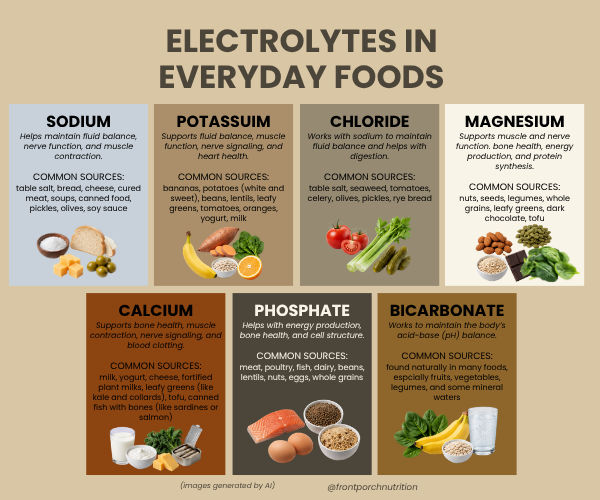
HOW MUCH DO WE ACTUALLY NEED?
As always: it depends.
For healthy adults, current dietary guidelines are approximately:
Sodium: dietary guidelines recommend limiting sodium to less than 2,300 mg per day for most adults. It's worth pointing out that this is a limit intended to reduce chronic disease risk, not a recommendation that every person should intentionally aim to consume exactly 2,300 mg. The average American already consumes considerably more sodium than this, largely from commercially prepared and processed foods.
Potassium: the NIH identifies the Adequate Intake (AI) of potassium as 3,400 mg/day for adult men and 2,600 mg/day for adult women, with needs changing somewhat during pregnancy and lactation.
Magnesium: adult recommendations generally range from 310–320 mg/day for women and 400–420 mg/day for men, depending on age.
The factor that general recommendations can’t completely account for (because, you guessed it: nuance!) is how much of these electrolytes we are losing. Sweat contains water and electrolytes (predominantly sodium and chloride, with smaller amounts of minerals like potassium), and how much fluid and sodium we lose can vary considerably depending on an individual’s sweat rate, environment, how long and how intensely someone is exercising, and individual physiology. Which leads us to…
WHO ACTUALLY BENEFITS FROM AN ELECTROLYTE PRODUCT?
For most people exercising for less than roughly 60–90 minutes under normal conditions (especially heat and humidity), regular food and water are generally enough to maintain fluid and electrolyte balance. But electrolyte replacement becomes more useful as the duration of exercise increases, when you're exercising in hot or humid environments, and when you're losing a substantial amount of sweat.
You might consider an electrolyte product if you:
Exercise for long periods of time, particularly endurance training
Train or work outdoors in hot/humid conditions
Sweat heavily or notice substantial salt residue on your clothing/skin
Participate in multiple workouts or sporting events in the same day
Eat a primarily whole foods diet with little to no added salt (minimal to no processed foods)
Need to quickly replace significant fluid and sodium losses
Are experiencing significant fluid losses from something like vomiting or diarrhea (although an actual oral rehydration solution may be more appropriate in these circumstances)
Another consideration that I think is prevalent on social media is the idea that adding electrolytes can/will make someone drink more water, and the answer there is …not really. If plain water is unappealing to you but flavored water seems enticing, that’s useful information. However, the electrolyte powder isn’t magically hydrating you in a way that water can’t (though it may be making the hydration behavior one that is easier to execute – there are strategies for this, but electrolytes might not be your solution).
WHAT ARE THE BENEFITS?
When electrolyte replacement is actually warranted, it can help replace minerals lost through sweat and support fluid balance, normal muscle and nerve function, and hydration during prolonged exercise. But more isn’t automatically better. One of my biggest hesitations with the current electrolyte craze is that we’ve somehow gone from “electrolytes can be helpful under certain circumstances” to “everyone needs a salty little beverage first thing in the morning.”
You probably don't need an electrolyte supplement. If you're already consuming plenty of sodium through your diet and aren't losing large amounts through sweat, adding another 500–1,000+ mg every day may simply be...more sodium. Meanwhile, potassium — which many Americans actually consume in amounts below recommendations — is often present in relatively small amounts in electrolyte products. (That doesn't make the product “bad,” it just means we should choose products based on what we're actually trying to accomplish rather than assuming more electrolytes means more hydration and more hydration means more health.)
OKAY, SO HOW DO I CHOOSE ONE?
Walk down the hydration aisle or type electrolytes into a Google search and this gets overwhelming very quickly. Some considerations that help answer what am I actually using this for?
1 | LOOK AT THE SODIUM
For exercise hydration, sodium is usually the electrolyte to be most clued-into, as it’s the primary electrolyte we’re losing in meaningful amounts through sweat. And there isn’t a “best” number, because our needs are dependent on what we’re doing (read: a 45-minute treadmill run in a climate controlled gym is different than 15 miles on a no-shade trail in Arizona in August).
Products containing several hundred — or even 1,000+ — milligrams of sodium aren’t inherently excessive in the right context. But you also don’t need the saltiest product you can find just because more sounds more effective; match the product to the job you need it to do.
2 | DON'T ASSUME SUGAR = BAD
This one deserves its own section because I can practically hear diet culture whispering, “But doesn’t my electrolyte need to be sugar-free?”
Not necessarily! If you’re simply adding electrolytes to your water throughout the workday because you like the flavor, you may prefer a low- or no-sugar option. But if you’re exercising for a prolonged period, carbohydrates can be very useful. Carbohydrates provide fuel for working muscles, and glucose can also support the absorption of sodium and water in the intestine; the sugar in a sports drink can aid fueling and hydration that are happening at the same time. Context is important!
3 | CHECK WHAT ELSE IS IN THERE
Electrolyte products often contain a lot more than electrolytes – caffeine, vitamins, amino acids, and proprietary blends, to name a few. More ingredients doesn’t always mean better, and if your goal is hydration and electrolyte replacement, a relatively simple ingredient list may be all you need. (If you are already taking supplements or medications, the addition of an electrolyte supplement or the ingredients in it can and should be a conversation with your healthcare provider.)
4 | CONSIDER THIRD-PARTY TESTING
Electrolyte powders sold as dietary supplements are supplements — which means they're not approved by the FDA for safety and effectiveness before they hit the market. If you're purchasing a supplement (of any kind), especially if you’re a competitive athlete, third-party certification is another factor worth considering. Programs like NSF Certified for Sport can help reduce the risk of contamination or ingredients that aren't accurately represented on the label. (Third-party certification doesn't mean a product is magically necessary or superior from a nutrition standpoint. It gives you additional information about the quality and contents of the product you’re buying.)
5 | PICK THE ONE YOU'LL ACTUALLY USE
Taste matters, price matters, convenience matters. Find an option that serves the purpose you need it to serve.
A FEW IMPORTANT CONSIDERATIONS
Electrolytes aren't risk-free simply because they're minerals our bodies naturally need.
Consistently consuming a high-sodium electrolyte product can meaningfully increase your overall sodium intake. Supplemental magnesium can cause GI symptoms like diarrhea, nausea and cramping at higher doses.
Potassium deserves particular attention. Healthy kidneys are generally very good at regulating potassium, but people with kidney disease or certain health conditions (and people taking medications that affect potassium levels, including some blood-pressure medications and potassium-sparing diuretics) may need to be especially careful with supplemental potassium.
If you have kidney disease, heart disease, high blood pressure or another medical condition that affects fluid/electrolyte balance (or take medications that do) this is one of those scenarios where your individual recommendations should come from your medical team rather than your favorite Instagram wellness account.
SO…THE BOTTOM LINE
Electrolytes are essential, and electrolyte supplements aren’t essential for everyone.
For most of us, most of the time, a varied diet and regular hydration are already doing a whole lot of the heavy lifting. An electrolyte product becomes more useful when there’s an actual reason to replace additional fluid and electrolytes — like long or sweaty workouts, hot environments, high sweat rates, or other significant fluid losses.
And if you do decide an electrolyte product makes sense for you, don’t get sucked into finding the packet with the longest ingredient list, the highest sodium number, or the fanciest marketing. Figure out which job you need it to do, and then choose accordingly. Sometimes that might be a higher-sodium electrolyte drink for a long, sweaty workout. Sometimes it might be a carbohydrate-containing sports drink (minimal electrolytes) because you need hydration AND fuel. And sometimes it might be a lower-sodium packet (not necessarily electrolytes, but flavor) because you mostly just like having something tasty in your water.
I know the marketing and often neon colors of the products make the promise of optimal hydration seem so exciting, but sometimes what we actually need is more of the boring stuff.
YOUR NEXT STEP
Curious about supplementation? Or about the nutrition hacks social media prescribes (and if they are meaningful at all?!)? At Front Porch Nutrition, I coach real people through real-life nutrition — thinking through what your wants, needs, and goals are, and working together to make changes that last not just in the moment, but for the long haul. Get started with 1:1 nutrition coaching today!