CONVENIENCE FOODS: MAKING NUTRITION WORK FOR YOU
When you hear “convenience foods,” what comes to mind?
For some people, it’s drive-thru dinners or frozen meals. For others, it’s pre-cut veggies, rotisserie chicken, or microwavable rice. The truth is, “convenience food” isn’t a single category, it’s a spectrum. And whether something supports your goals depends a lot more on how you use it than on what it is.
THE REPUTATION DILEMMA
Convenience foods have gotten a bad rap in the nutrition world. We’ve been told that “real” health means cooking from scratch, that faster equals “processed,” and that processed automatically equals “bad.”
But that mindset overlooks the reality most of us live in: we’re balancing jobs, families, workouts, errands, and, at times, what can feel like 7 million other things every day. The goal doesn’t have to be to win an award for time spent in the kitchen — it’s to make choices that help you eat in a way that is aligned with your goals, consistently.
Sometimes that means grabbing a frozen meal. Sometimes it means prepping protein(s) on Sunday so weekday lunches or dinners can take five minutes. Both can be smart, aligned choices.
REDEFINING “CONVENIENCE”
A convenience food isn’t automatically unhealthy. It’s anything that makes nourishing yourself easier and more efficient.
Read that again: A “convenience food” is one that makes nourishing yourself easier and more efficient.
Through that lens, it could be:
a rotisserie chicken that saves you 45 minutes of cooking
pre-chopped veggies that make it more likely you’ll eat them
microwavable quinoa or rice packets for fast carb sources
frozen protein waffles for a quick breakfast
ready-to-drink shakes for a packed morning
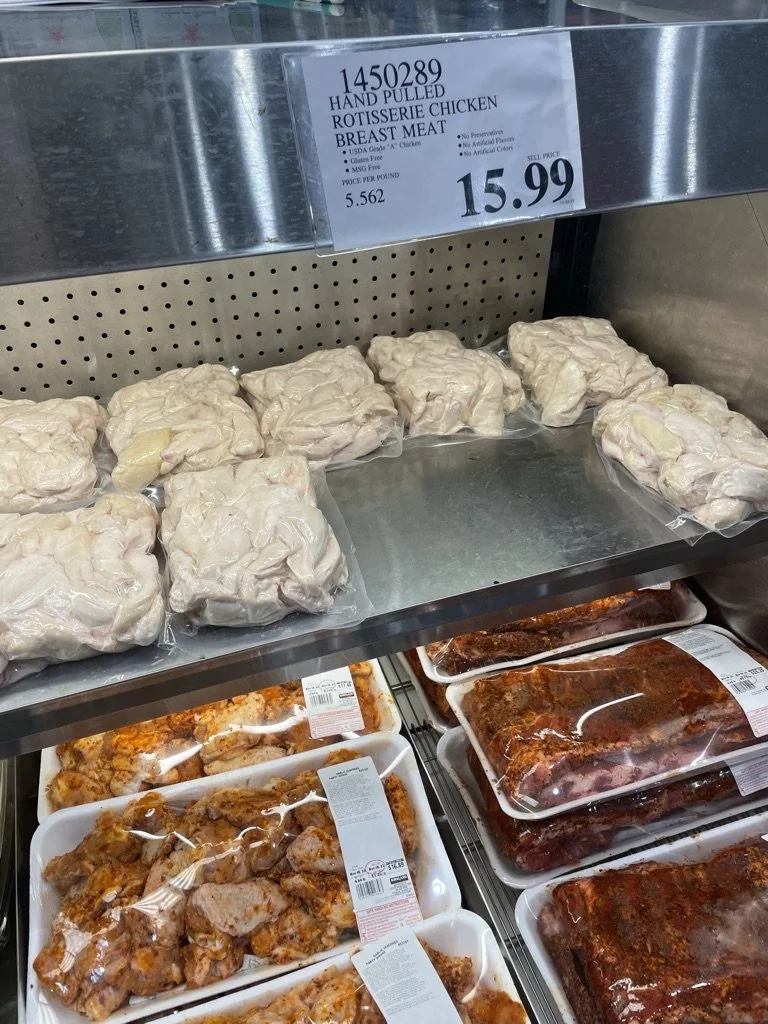
The goal is alignment: does this choice support my energy, goals, and time in a realistic way? Is this the right way to spend my resources (time, energy, money)?
If the answer is yes, it’s a smart use of convenience, not a shortcut you should feel bad about.
CONVENIENCE 🤝🏼 CONSISTENCY
One of the ways to help with consistency in our nutrition is to remove friction, which can be physical (like not having the time to do something) or mental (the feeling of “ugh, I really don’t want to do this,” for example).
Convenience foods reduce the number of decisions you have to make and the number of steps standing between you and a filling meal. That’s what keeps your habits intact on the busiest days — when you’re running late, when motivation is low, or when cooking dinner feels like a chore.
Because at the end of the day, eating in a way that supports your goals matters more than how that food got on your plate.
FINDING A MIDDLE GROUND
This doesn’t mean you never cook from scratch or only rely on the DoorDash meals that have “a great balance of macros.” It means you can create a mix of fresh, prepped, and ready-made foods that work for your life.
A few examples:
Use frozen veggies and microwaveable rice as a base, then add your batch-cooked protein.
Pair store-bought protein snacks (like a bar or a shake) with fruit or veggies for a snack that will leave you fuller with protein and fiber.
Build a weeknight rotation where some components are fresh and some are convenient (pre-made, pre-washed, or pre-cooked).
Convenience doesn’t mean you’re “cheating.” It means you’re planning smarter.
SO:
Convenience foods are the ones that make it easier to follow through on your nutrition goals — not harder. If something saves you time, energy, or stress and helps you eat in a way that feels good, that’s a win (this is your permission to see it as such if this usually feels difficult for you!). Because food and habits that fit your life are the food and habits that are likely to stick around for a long time.
YOUR NEXT STEP
Does this blog post resonate with you? At Front Porch Nutrition, I coach real people through real-life nutrition — thinking through what your wants, needs, and goals are, and working together to make changes that last not just in the moment, but for the long haul. Get started with 1:1 nutrition coaching today!