5 WAYS TO MAKE CHICKEN MORE EXCITING
Chicken is one of those foods that makes it into a lot of meal prep conversations for good reason: it’s versatile, relatively inexpensive, easy to cook in bulk, and an easy way to add protein to a meal. It can also get really boring really quickly if your default preparation is chicken breast + salt + pepper every single week. (No hate to s+p! But sometimes they deserve to be part of the support cast, not the main actors, ya know??)
The good news is you don’t need a complicated marinade, a long ingredient list, or hours of advance planning to make it taste better. In fact, I hesitate to even call some of these “marinades.” They’re basically just things you can put on chicken before you cook it. And you probably already have most of them at home already.
A couple quick notes about marinating time and cooking times before we get to the flavors.
Do I need to marinate the chicken ahead of time?
Nope! While I’m calling these “marinades,” most of what we’re doing here is really adding a flavorful coating to the outside of the chicken – which means you can add it right before cooking and still get plenty of flavor.
Traditional marinades often include ingredients like acids, salt, and oil and are given time to interact with the surface of the meat. But even then, marinades don't penetrate nearly as deeply into meat as we sometimes assume. With strongly flavored ingredients like BBQ sauce, pesto, Dijon, or miso (a sneak peek to the ideas below!), a lot of what you're tasting comes from the sauce and seasoning that stays on the outside of the chicken as it cooks.
So, if you want to prep your chicken in the morning and let it hang out in the refrigerator until dinner? Go for it. But if it's 6:00pm and you're just now figuring out what you're making? You can spread on your sauce and start cooking. No several-hours-ahead planning required.
How long does chicken take to bake?
One of the nice things about these options is that you can get chicken into the oven pretty quickly – which makes them especially useful when you're trying to figure out dinner in real time.
For boneless, skinless chicken breasts, try:
375°F: approximately 25–30 minutes
400°F: approximately 20–25 minutes
425°F: approximately 18–22 minutes
For boneless, skinless chicken thighs (our favorite and forever go-to cut of chicken), plan for roughly 20–30 minutes at 400°F, depending on their size. For chicken tenderloins, which are smaller and thinner, start checking them around 15–20 minutes at 400°F.
These times are estimates (and if you’ve got a standard temperature and time that you’re used to cooking your chicken, no need to fix something that ain’t broken) – the thickness of the chicken, your oven, and whether the chicken went into the oven straight from the refrigerator can all affect cooking time. Instead of relying on the clock alone, use a meat thermometer to check for doneness. Chicken should reach an internal temperature of 165°F at the thickest part.
In other words, for most of these meals, you can reasonably go from “what the heck are we having for dinner?” to fully flavored and cooked chicken in about 30 minutes.
With that out of the way, here are five of my favorite low-effort ways to make basic chicken a little more exciting.
1 | HONEY MUSTARD
This might be the easiest place to start because honey mustard is already doing the work of multiple ingredients for you: you get sweetness, acidity, and plenty of flavor from one bottle.
Simply coat your chicken (both sides) in honey mustard before cooking. You can let it sit in the refrigerator for a few hours if you're prepping ahead, but you certainly don't have to turn this into an overnight-marinating situation.
Try it with:
Chicken breasts, thighs, tenderloins, or chicken cut into chunks.
To bake:
Coat the chicken with honey mustard, place it in a baking dish or on a lined sheet pan, and bake until the chicken reaches an internal temperature of 165°F.
To grill:
Coat the chicken before grilling, but keep an eye on it, because the sugar in honey mustard can cause it to brown more quickly. You can also grill lightly seasoned chicken and brush on additional honey mustard toward the end.
Turn it into a meal:
Pair it with roasted potatoes and a green vegetable, slice it over a salad, or use leftovers in a wrap with lettuce, tomato, and a little extra honey mustard. Our current favorite veggie combo (see below) with honey mustard chicken is zucchini + red pepper (grilled or broiled) — and if you’re able to get your hands on any of this hot honey from Trader Joe’s…well, thank me later 😉
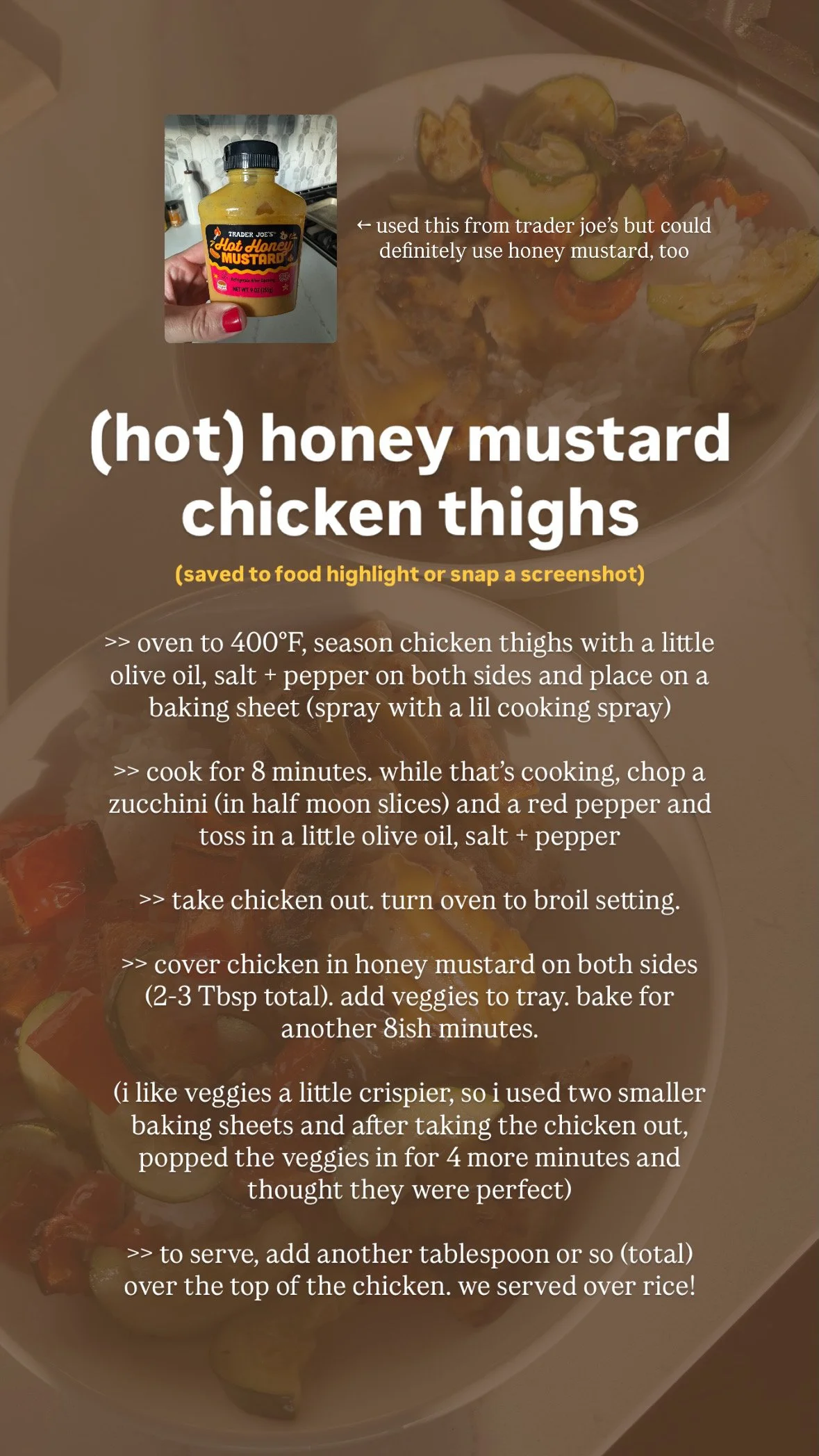
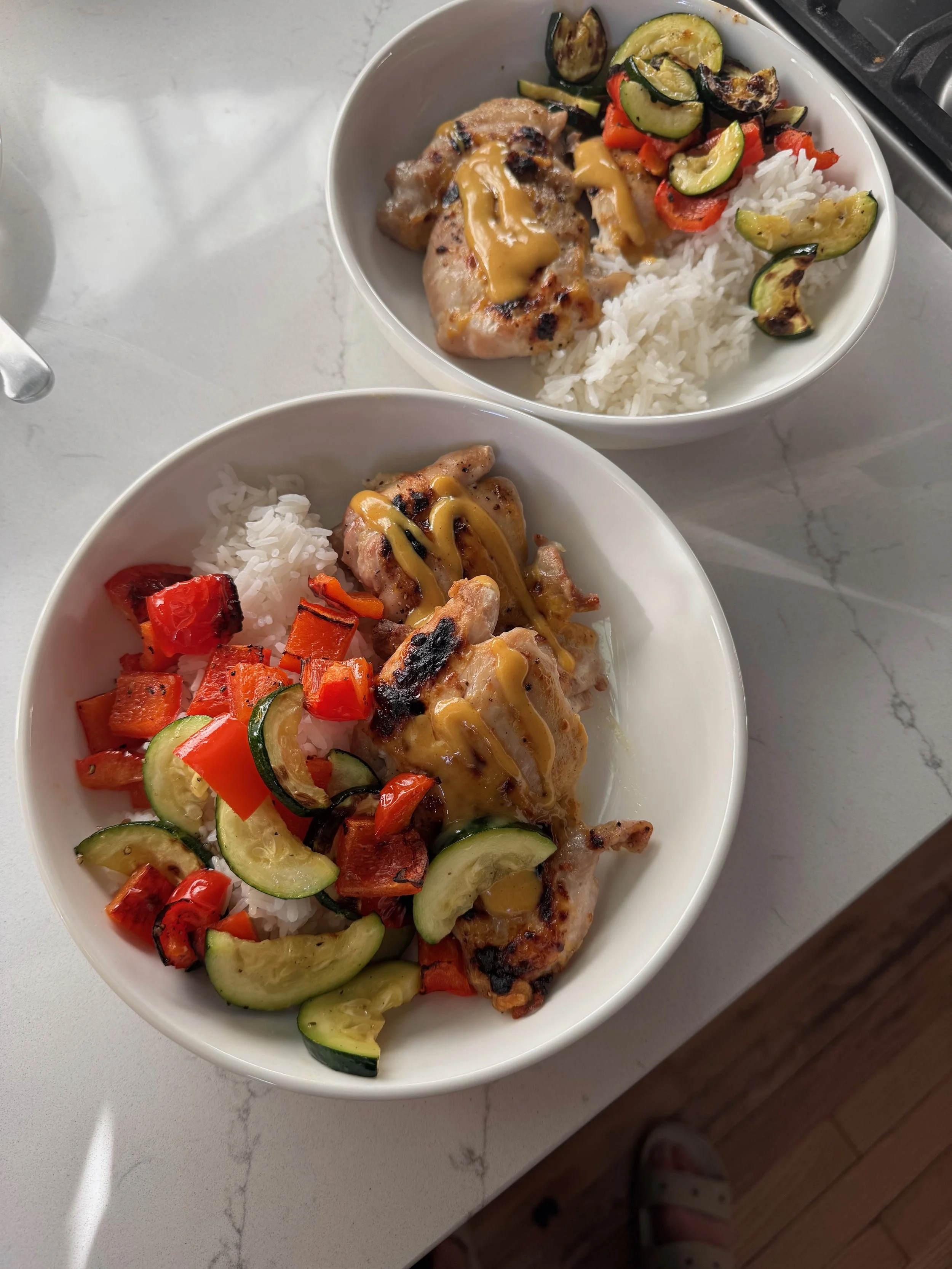
2 | BBQ SAUCE
There is absolutely nothing revolutionary about putting BBQ sauce on chicken, which is exactly why it belongs on this list. (Nutrition does not need to be revolutionary to be useful!)
Use whatever BBQ sauce you already like or have in the fridge or pantry and coat your chicken before baking or grilling. Similar to honey mustard, BBQ sauce usually contains some sugar, so I like adding more sauce toward the end of cooking rather than repeatedly coating the chicken over high heat.
Try it with:
Chicken breasts, thighs, tenderloins, drumsticks, or diced chicken.
To bake:
Season the chicken lightly, add a layer of BBQ sauce, and bake until cooked through. Brush on another layer of sauce during the last few minutes if you want more flavor.
To grill:
Grill your chicken most of the way, then brush it generously with BBQ sauce during the last few minutes on each side.
Turn it into a meal:
Serve it with corn, potatoes, baked beans, or coleslaw; make a BBQ chicken rice bowl; or chop leftovers and add them to a salad or wrap.
3 | MAYO + DIJON
If mayo on raw chicken sounds strange to you, stay with me and give me a chance to win you over. A thin layer of mayonnaise helps seasonings stick to the chicken, adds flavor and moisture, and can help the outside brown beautifully while keeping things simple. Did I mention the moisture?!?
Mix mayo with Dijon mustard (try a 2:1 mayo:Dijon ratio, so, for example, ½ cup mayo and ¼ cup Dijon), spread a thin layer over the chicken, and sprinkle generously with your favorite seasoning or topping (really, you can go nuts here).
This is a great option if you are usually a salt + pepper + a little seasoning before baking kind of prep person – the mayo and Dijon ups your chicken game (and its moisture content) a little bit.
Some favorite seasonings/toppings to inspire you: everything but the bagel seasoning, parmesan cheese and garlic powder, ranch seasoning, lemon pepper, parmesan cheese and Italian seasoning, taco seasoning, za’atar, panko…the list truly is endless.
Try it with:
Chicken breasts, thighs, or tenderloins. This one works well on baked wings, too!
To bake:
Spread the mixture over the chicken, add your seasoning, and bake until the chicken reaches 165°F. This one is especially good baked because the coating has a chance to brown.
To grill:
Use a relatively thin coating rather than leaving globs of mayo on the chicken before putting it on the grill. You can also mix the mayo and Dijon together, toss the chicken in it, and then add the seasoning.
Turn it into a meal:
Pair it with roasted vegetables and rice or potatoes, slice it onto a sandwich, or serve it alongside a big chopped salad.
4 | WHITE MISO
If you have a container of white miso sitting in your refrigerator and only pull it out when a recipe specifically calls for it, consider this your invitation to use it more often.
White miso brings a salty, savory, slightly sweet flavor to otherwise very basic chicken. Because miso is thick, I like to loosen it with a small amount of water or oil so it's easier to spread over the chicken. You can absolutely add other ingredients (soy sauce, rice vinegar, ginger, garlic, sesame oil) but you don't need to. The entire point here (and of this whole post, really) is keeping things easy.
Try it with:
Chicken thighs are especially good here, but breasts and tenderloins work too.
To bake:
Spread a thin layer of the miso mixture over the chicken and bake until cooked through. Miso can brown quickly, so check on it toward the end.
To grill:
Use a thin coating and avoid excessively high heat since the miso can burn. You can also reserve some of your mixture (make sure you reserve it before it touches the raw chicken) to brush on toward the end.
Turn it into a meal:
Serve with rice and roasted or sautéed vegetables, add it to a bowl with cucumber and edamame, or slice it over a crunchy cabbage salad.
5 | PESTO
Pesto is another ingredient that is already essentially a finished flavor combination. You've got herbs, garlic, oil, cheese, and plenty of flavor without pulling five different things out of your pantry. You can spread it directly onto chicken and call it a day.
Try it with:
Chicken breasts, thighs, tenderloins, or chicken cut into bite-sized pieces.
To bake:
Coat the chicken with pesto and bake until it reaches 165°F. You can add another small spoonful of pesto after cooking if you want an even stronger pesto flavor.
To grill:
Use a lighter coating before grilling to reduce flare-ups from the oil, then add more pesto after the chicken comes off the grill. Using diced chicken can work to your advantage here, as adding more pesto in at the end is as easy as just tossing it in a bowl.
Turn it into a meal:
Serve it with pasta and vegetables, add it to a caprese-inspired salad with tomatoes and mozzarella, make a pesto chicken sandwich, or pair it with roasted potatoes and whatever vegetable needs to be used up.
YOUR CHICKEN DOESN’T NEED TO BE COMPLICATED
Of course, you can make your own marinades. You can measure oil and acid and spices, mince fresh garlic, chop herbs, and let your chicken sit overnight. These are delicious options, and they also aren’t the only way to create a rich and flavorful profile for your protein.
Sometimes making your nutrition easier isn't about finding another recipe. It's realizing that something already sitting in the door of your refrigerator can do most of the work for you. It’s realizing that there is an option available for you somewhere between the all and nothing of just-salt-and-pepper and full-blown-marinade that requires an entire spice cabinet and hours of prep.
YOUR NEXT STEP
Will you give any of these marinades a try? At Front Porch Nutrition, I coach real people through real-life nutrition — thinking through what your wants, needs, and goals are, and working together to make changes that last not just in the moment, but for the long haul. And oftentimes, that means working smarter, not harder, when it comes to evening-of dinnertime prep. Get started with 1:1 nutrition coaching today!